
Publications
Journal Articles
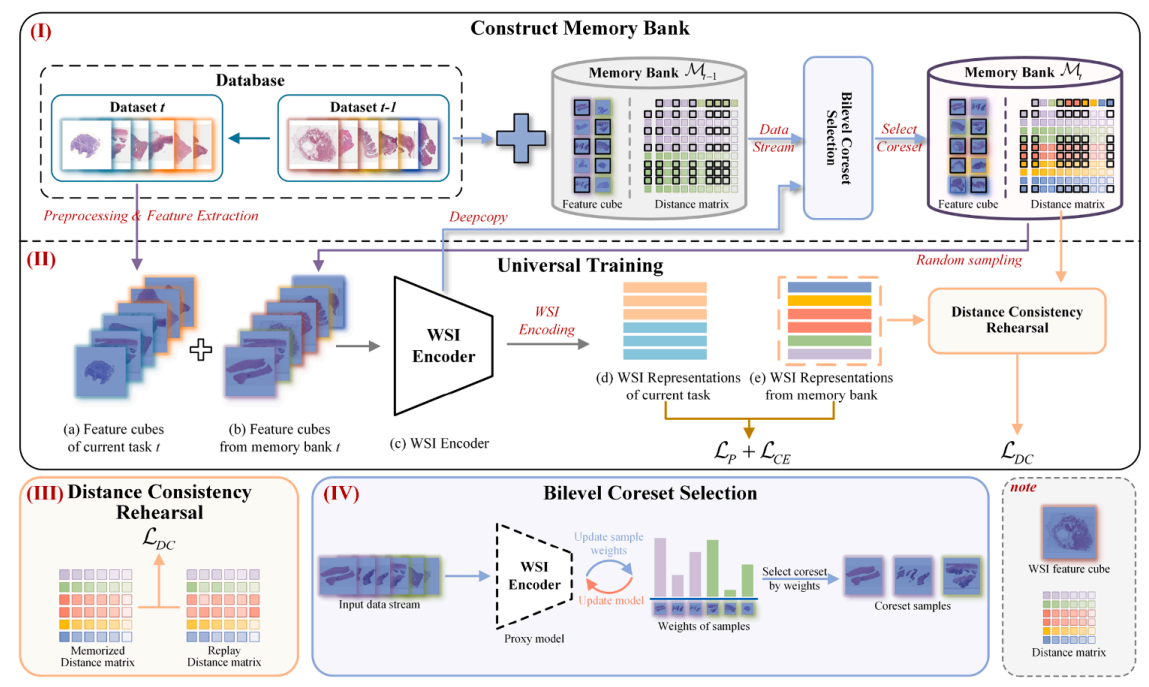
Lifelong Content-based Histopathology Image Retrieval via Bilevel Coreset Selection and Distance Consistency Rehearsal
Abstract
Content-based histopathological image retrieval (CBHIR) has shown strong performance on static databases by retrieving whole slide images (WSIs) with similar content to query images. However, in clinical settings, the rapid growth of WSI databases challenges current CBHIR methods, which either require costly retraining or suffer performance degradation on new data, e.g., simple fine-tuning causes a 37.5% drop in mAP@5 compared to joint training. To address this, we propose a Lifelong Content-based Histopathology Image Retrieval (LCBHIR) framework that mitigates catastrophic forgetting in continual retrieval, where models lose prior knowledge when updated on expanding databases. The central challenge is balancing stability and plasticity. To enhance plasticity, we design a local memory bank with bilevel coreset sampling, formulating instance selection as a two-level optimization problem. This assigns higher weights to informative or hard-to-learn samples, refining decision boundaries in the feature space. To preserve stability, we introduce a distance consistency rehearsal (DCR) module, which maintains the relative feature distances of old samples, ensuring consistency across retrieval tasks and improving reliability in clinical applications. We validate our method on a large-scale continual WSI dataset from TCGA projects, comprising approximately 7400 WSIs across 6 primary sites and 19 cancer subtypes. The experimental results have demonstrated the proposed method is effective and is superior to the state-of-the-art methods, achieving 5.7 ∼ 19.4% higher mAP compared to existing continual learning methods. The code is available at https://github.com/OliverZXY/LCBHIR.
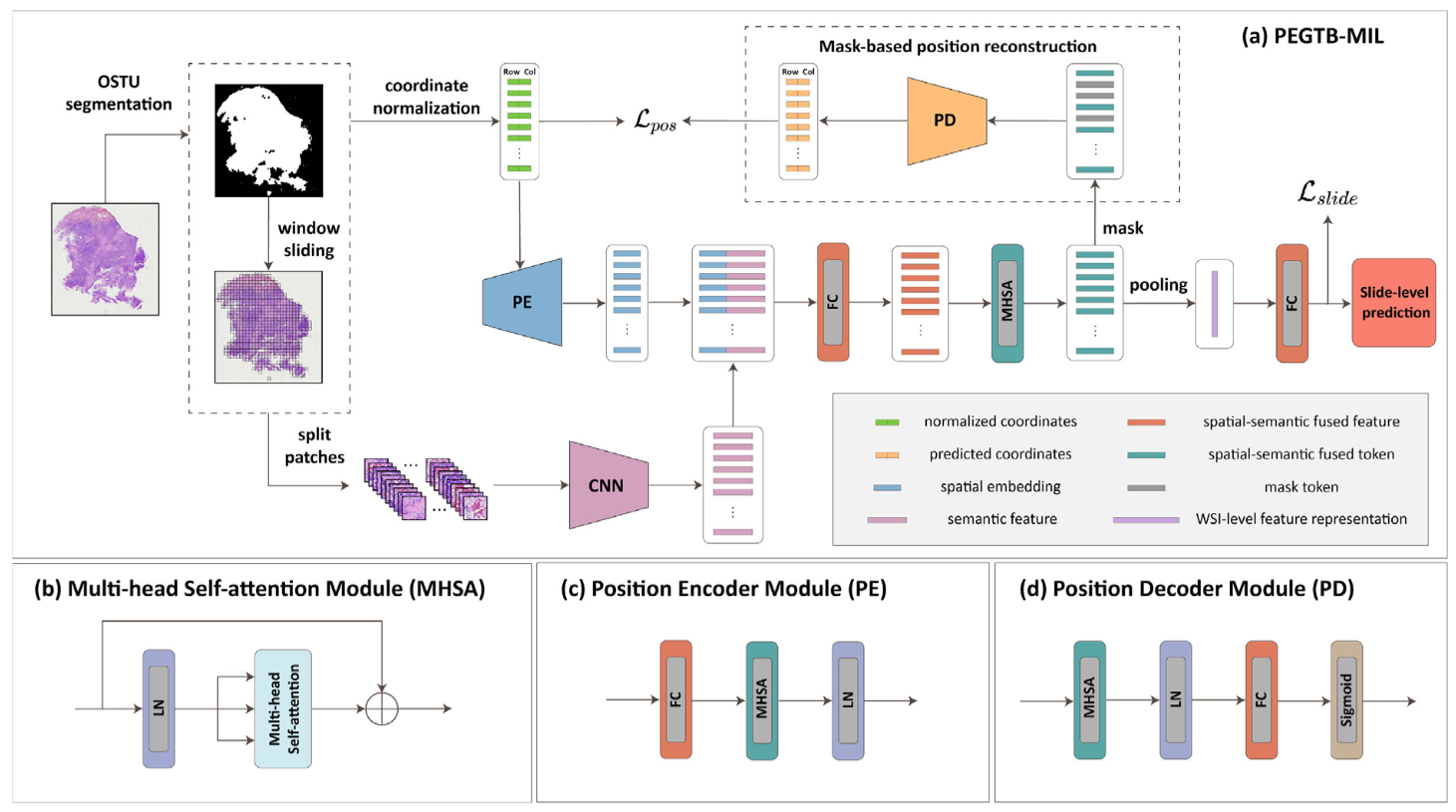
Positional encoding-guided transformer-based multiple instance learning for histopathology whole slide images classification
Abstract
Whole slide image (WSI) classification is clinically important for computer-aided pathological diagnosis, yet manual annotation is expensive. We propose a positional encoding-guided transformer-based multiple instance learning method (PEGTB-MIL) that encodes 2D spatial position into patch features and models spatial–semantic dependencies with multi-head self-attention, with an auxiliary reconstruction task to improve consistency and generalization. Experiments on TCGA benchmarks and in-house clinical datasets demonstrate strong performance on cancer subtyping and gene mutation prediction.
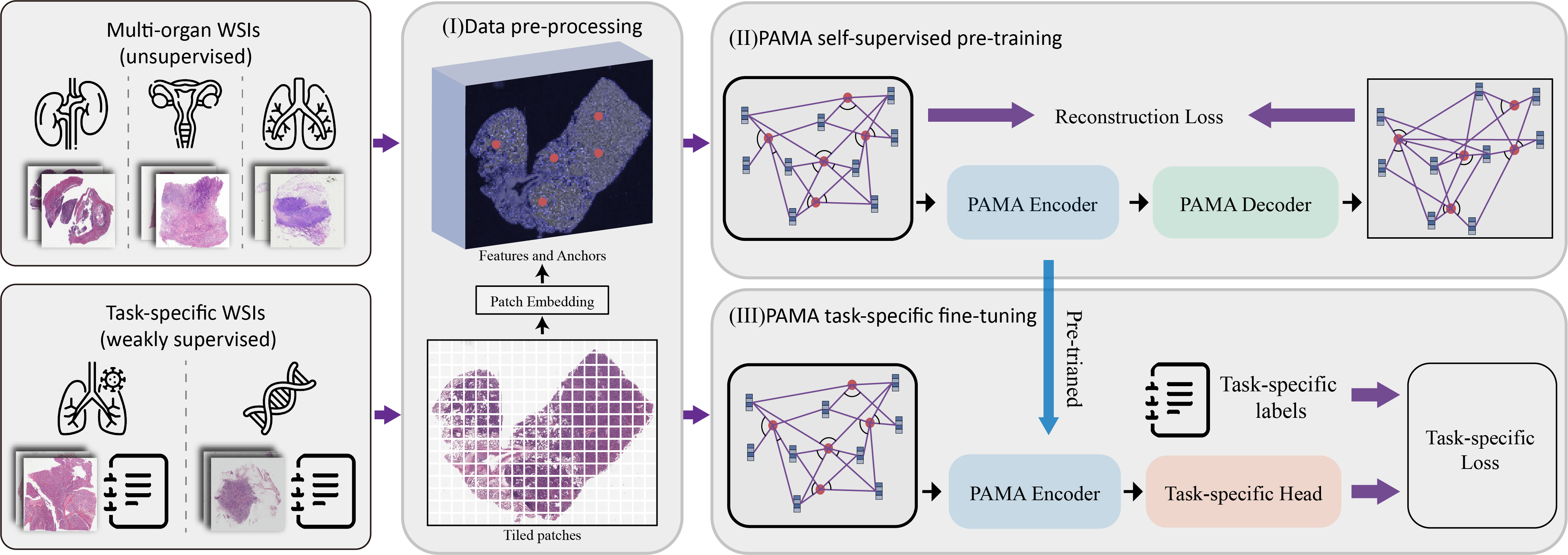
Pan-cancer histopathology WSI pre-training with position-aware masked autoencoder
Abstract
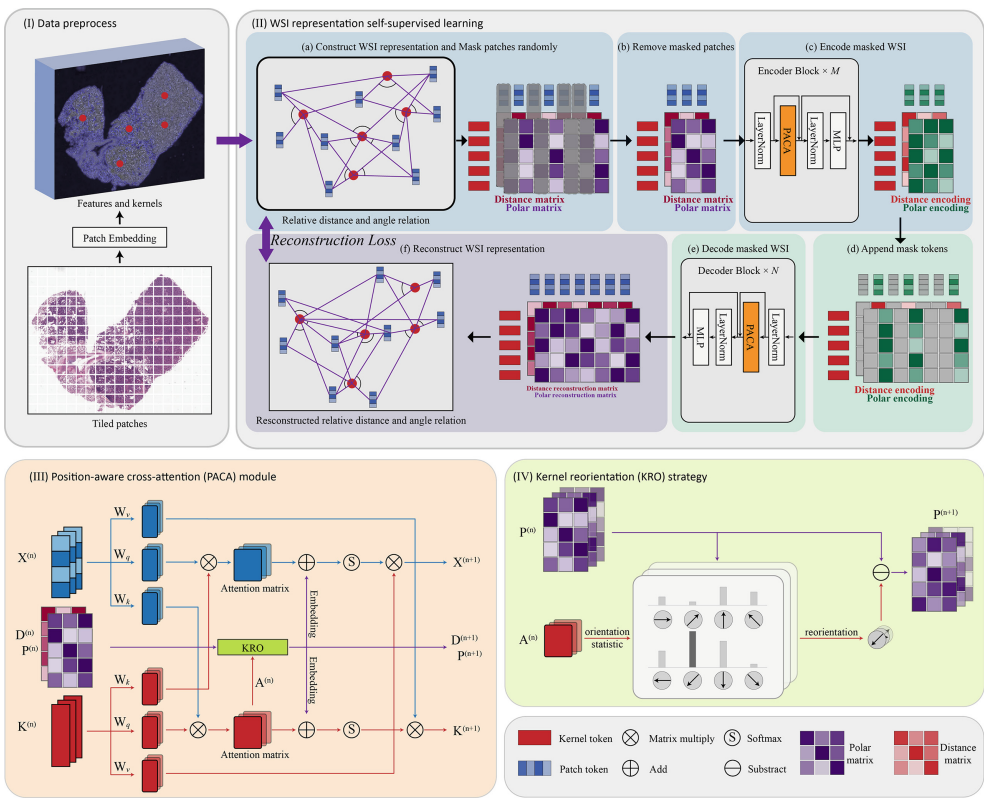
Large-scale pre-training models have promoted the development of histopathology image analysis. However, existing self-supervised methods for histopathology images primarily focus on learning patch features, while there is a notable gap in the availability of pre-training models specifically designed for WSI-level feature learning. In this paper, we propose a novel self-supervised learning framework for pan-cancer WSI-level representation pre-training with the designed position-aware masked autoencoder (PAMA). Meanwhile, we propose the position-aware cross-attention (PACA) module with a kernel reorientation (KRO) strategy and an anchor dropout (AD) mechanism. The KRO strategy can capture the complete semantic structure and eliminate ambiguity in WSIs, and the AD contributes to enhancing the robustness and generalization of the model. We evaluated our method on 7 large-scale datasets from multiple organs for pan-cancer classification tasks. The results have demonstrated the effectiveness and generalization of PAMA in discriminative WSI representation learning and pan-cancer WSI pre-training. The proposed method was also compared with 8 WSI analysis methods. The experimental results have indicated that our proposed PAMA is superior to the state-of-the-art methods.
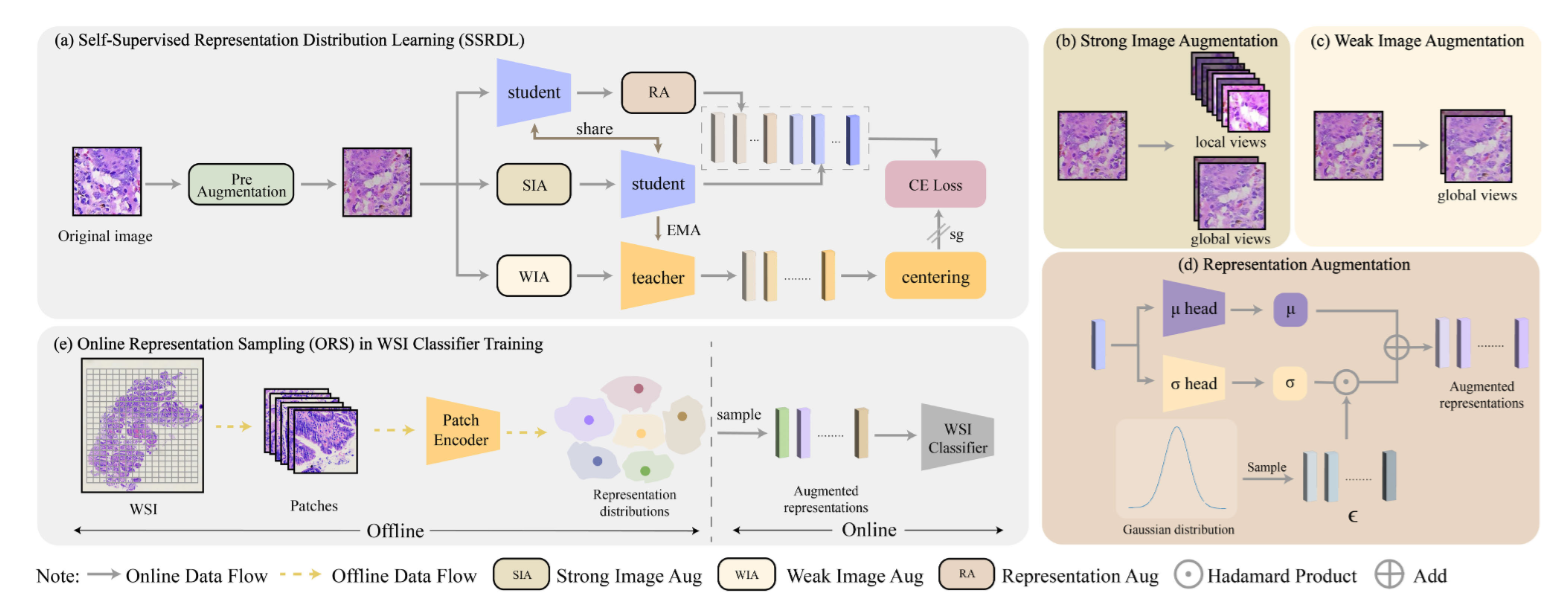
Self-supervised representation distribution learning for reliable data augmentation in histopathology WSI classification
Abstract
Multiple instance learning (MIL) based whole slide image (WSI) classification is often carried out on the representations of patches extracted from WSI with a pre-trained patch encoder. The performance of classification relies on both patch-level representation learning and MIL classifier training. Most MIL methods utilize a frozen model pre-trained on ImageNet or a model trained with self-supervised learning on histopathology image dataset to extract patch image representations and then fix these representations in the training of the MIL classifiers for efficiency consideration. However, the invariance of representations cannot meet the diversity requirement for training a robust MIL classifier, which has significantly limited the performance of the WSI classification. In this paper, we propose a Self-Supervised Representation Distribution Learning framework (SSRDL) for patch-level representation learning with an online representation sampling strategy (ORS) for both patch feature extraction and WSI-level data augmentation. The proposed method was evaluated on three datasets under three MIL frameworks. The experimental results have demonstrated that the proposed method achieves the best performance in histopathology image representation learning and data augmentation and outperforms state-of-the-art methods under different WSI classification frameworks. The code is available at https://github.com/lazytkm/SSRDL.
Partial-label contrastive representation learning for fine-grained biomarkers prediction from histopathology whole slide images
Abstract
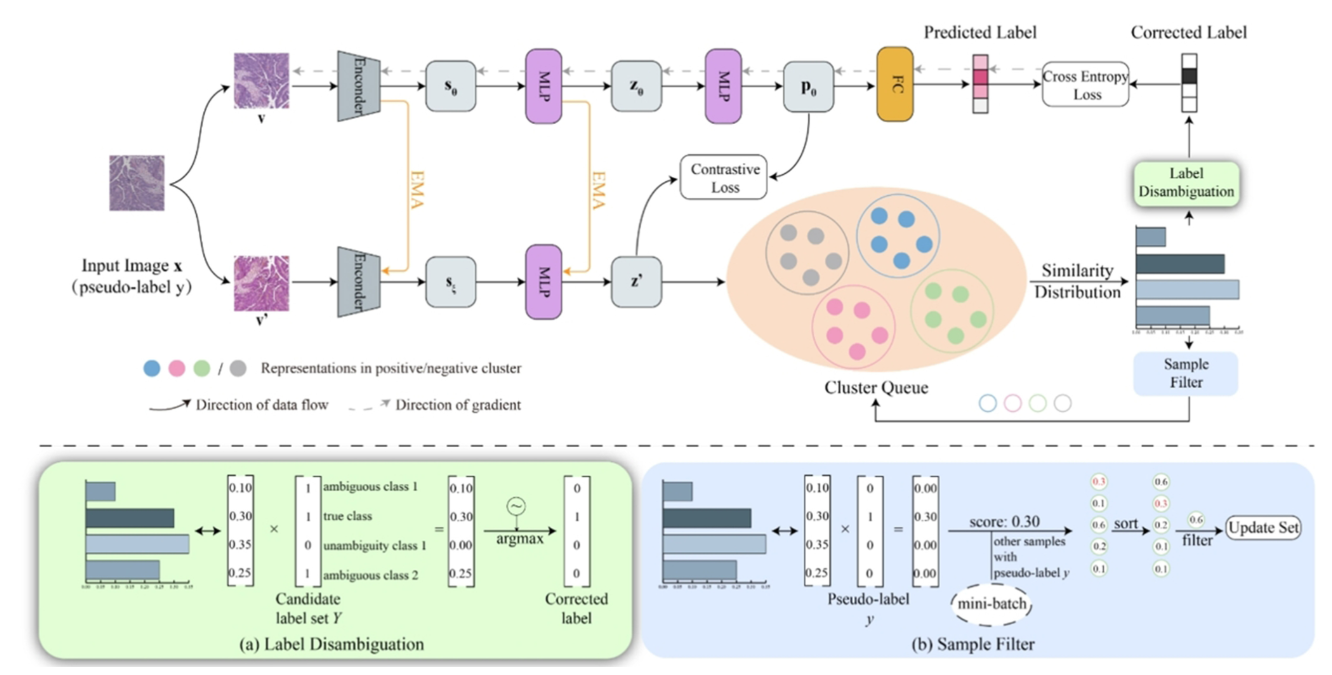
In the domain of histopathology analysis, existing representation learning methods for biomarkers prediction from whole slide images (WSIs) face challenges due to the complexity of tissue subtypes and label noise problems. This paper proposed a novel partial-label contrastive representation learning approach to enhance the discrimination of histopathology image representations for fine-grained biomarkers prediction. We designed a partial-label contrastive clustering (PLCC) module for partial-label disambiguation and a dynamic clustering algorithm to sample the most representative features of each category to the clustering queue during the contrastive learning process. We conducted comprehensive experiments on three gene mutation prediction datasets, including USTC-EGFR, BRCA-HER2, and TCGA-EGFR. The results show that our method outperforms 9 existing methods in terms of Accuracy, AUC, and F1 Score. Specifically, our method achieved an AUC of 0.950 in EGFR mutation subtyping of TCGA-EGFR and an AUC of 0.853 in HER2 0/1+/2+/3+ grading of BRCA-HER2, which demonstrates its superiority in fine-grained biomarkers prediction from histopathology whole slide images.
Conference Papers
Histopathology-Genomics Multi-modal Structural Representation Learning for Data-Efficient Precision Oncology
Abstract
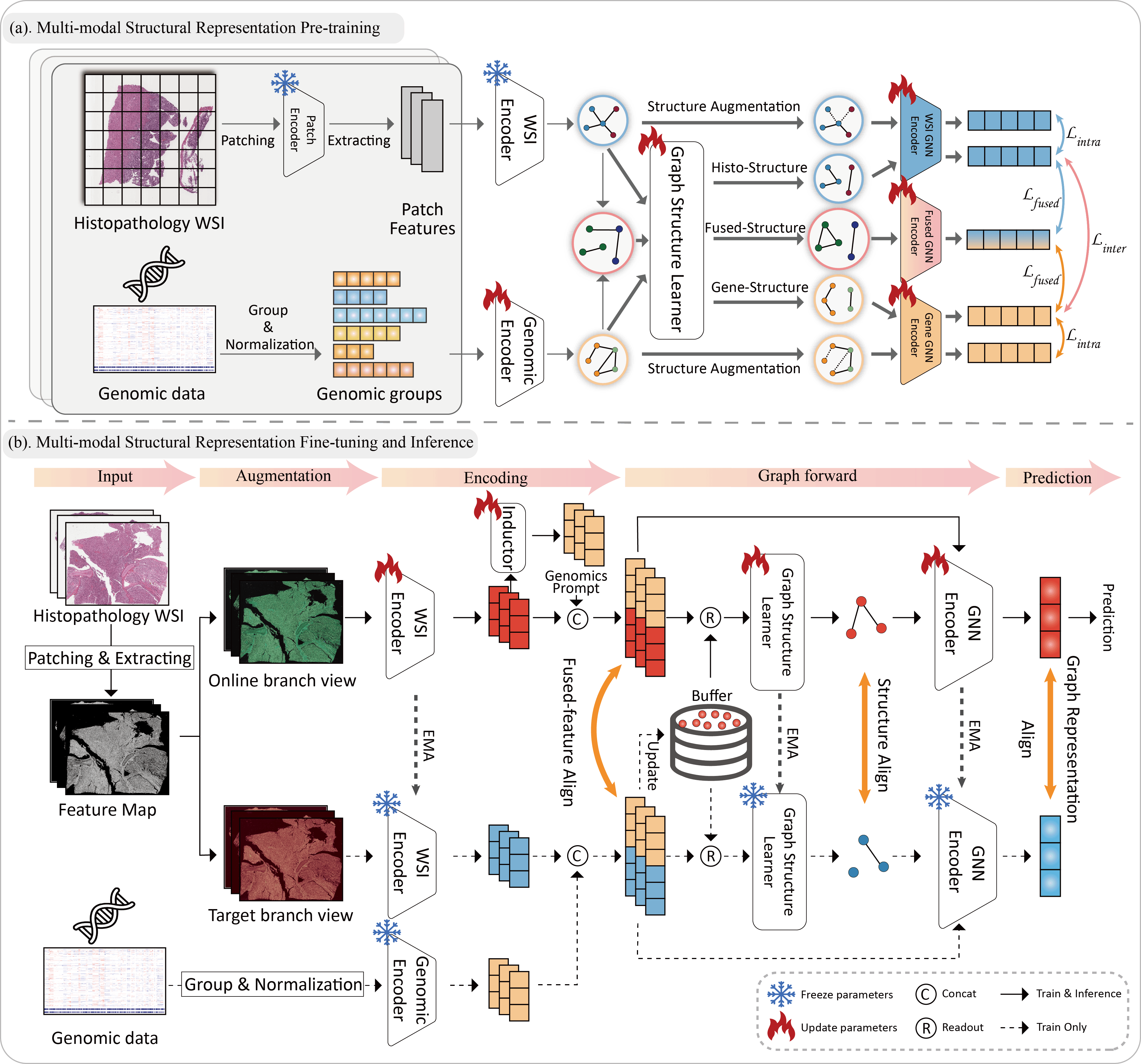
Fusing histopathology images and genomics data with deep learning has significantly advanced precision oncology. However, genomics data is often missing due to its high acquisition cost and complexity in real-world clinical scenarios. Existing solutions aim to reconstruct genomics data from histopathology images. Nevertheless, these methods typically relied only on individual cases and overlooked the potential relationships among cases. Additionally, they failed to take advantage of the authentic genomics data of diagnostically related cases that are accessible from training for inference. In this work, we propose a novel Multi-modal Structural Representation Learning (MSRL) framework for data-efficient precision oncology. We pre-train a histopathology-genomics multi-modal representation graph adopting Graph Structure Learning (GSL) to construct inter-case relevance based on the data inherently. During the fine-tuning stage, we dynamically capture structural relevance between the training cases and the acquired authentic cases for precise prediction. MSRL leverages prior inter-case associations and authentic genomics data from diagnosed cases based on the graph, which contributes to effective inference based on the single histopathology image modality. We evaluated MSRL on public TCGA datasets with 7,263 cases across various tasks, including survival prediction, cancer grading, and gene mutation prediction. The results demonstrate that MSRL significantly outperforms existing missing-genomics generation approaches with improvements of 1.44% to 3.12% in C-Index on survival prediction tasks and achieves comparable performance to multi-modal fusion methods.
Genomics-embedded histopathology whole slide image encoding for data-efficient survival prediction
Abstract
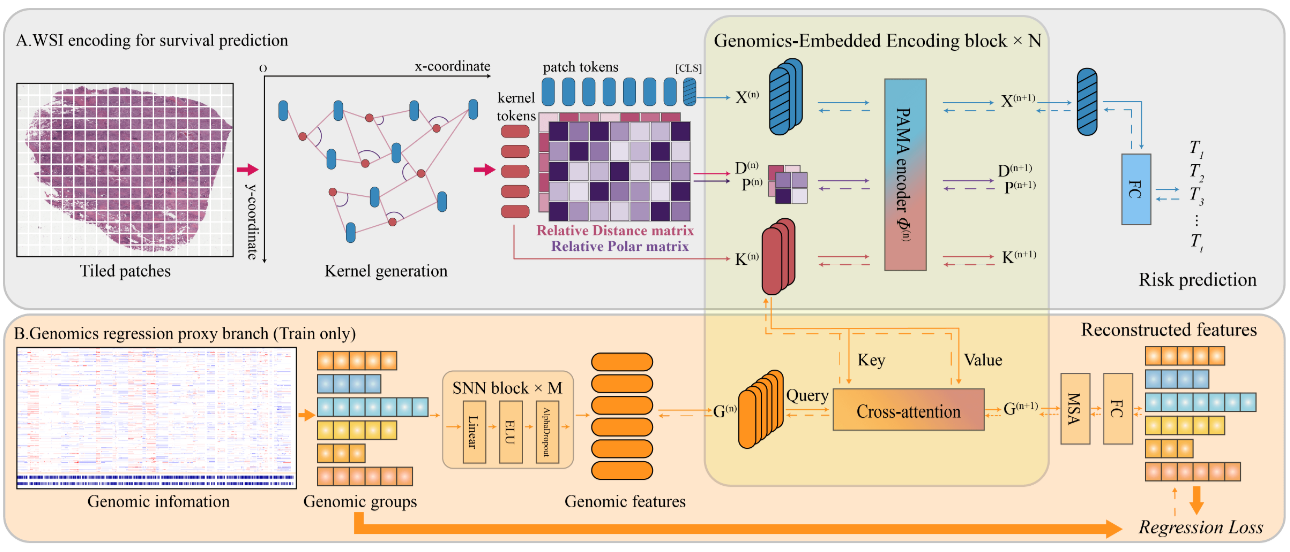
Extensive works have shown that fusing histopathology images with genomics features can significantly improve the performance of survival prediction. However, the current methods still require both image and genomics data during the inference phase. In this work, we proposed the Genomics-Embedded WSI Encoding (GEE) framework where a proxy branch is built to guide the WSI encoder to extract genomics-related features from image modality. It makes the model achieve comparable inference accuracy solely based on image modality input when compared to the SOTA multi-modal-based survival prediction methods.
Lifelong histopathology whole slide image retrieval via distance consistency rehearsal
Abstract
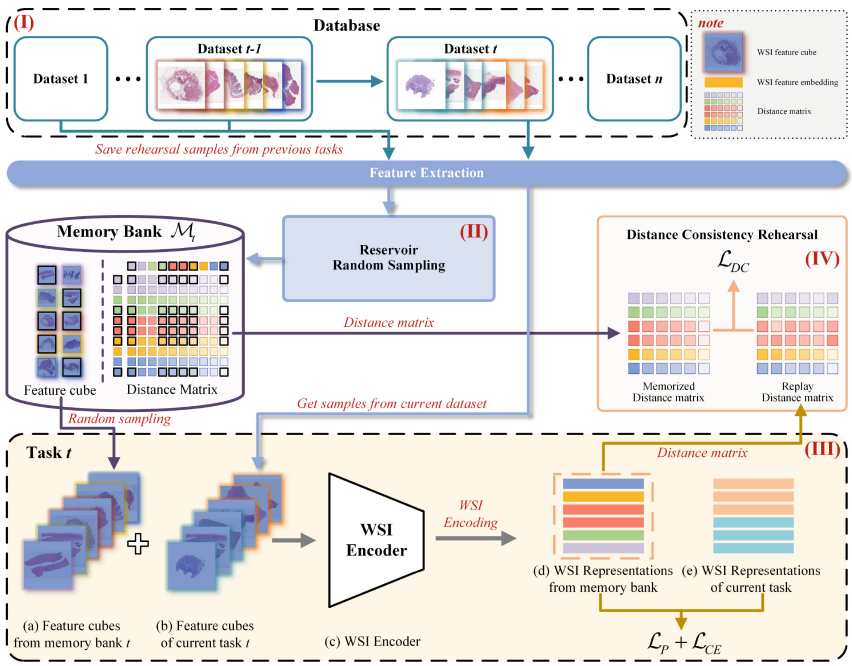
Content-based histopathological image retrieval (CBHIR) has gained attention in recent years, offering the capability to return histopathology images that are content-wise similar to the query one from an established database. However, in clinical practice, the continuously expanding size of WSI databases limits the practical application of the current CBHIR methods. In this paper, we propose a Lifelong Whole Slide Retrieval (LWSR) framework to address the challenges of catastrophic forgetting by progressive model updating on continuously growing retrieval database. Our framework aims to achieve the balance between stability and plasticity during continuous learning. To preserve system plasticity, we utilize local memory bank with reservoir sampling method to save instances, which can comprehensively encompass the feature spaces of both old and new tasks. Furthermore, A distance consistency rehearsal (DCR) module is designed to ensure the retrieval queue’s consistency for previous tasks, which is regarded as stability within a lifelong CBHIR system. We evaluated the proposed method on four public WSI datasets from TCGA projects. The experimental results have demonstrated the proposed method is effective and is superior to the state-of-the-art methods. The code is available at https://github.com/OliverZXY/LWSR.
Position-aware masked autoencoder for histopathology wsi representation learning
Abstract
Transformer-based multiple instance learning (MIL) framework has been proven advanced for whole slide image (WSI) analysis. However, existing spatial embedding strategies in Transformer can only represent fixed structural information, which are hard to tackle the scale-varying and isotropic characteristics of WSIs. Moreover, the current MIL cannot take advantage of a large number of unlabeled WSIs for training. In this paper, we propose a novel self-supervised whole slide image representation learning framework named position-aware masked autoencoder (PAMA), which can make full use of abundant unlabeled WSIs to improve the discrimination of slide features. Moreover, we propose a position-aware cross-attention (PACA) module with a kernel reorientation (KRO) strategy, which makes PAMA able to maintain spatial integrity and semantic enrichment during the training. We evaluated the proposed method on a public TCGA-Lung dataset with 3,064 WSIs and an in-house Endometrial dataset with 3,654 WSIs, and compared it with 6 state-of-the-art methods. The results of experiments show our PAMA is superior to SOTA MIL methods and SSL methods. The code will be available at https://github.com/WkEEn/PAMA.